

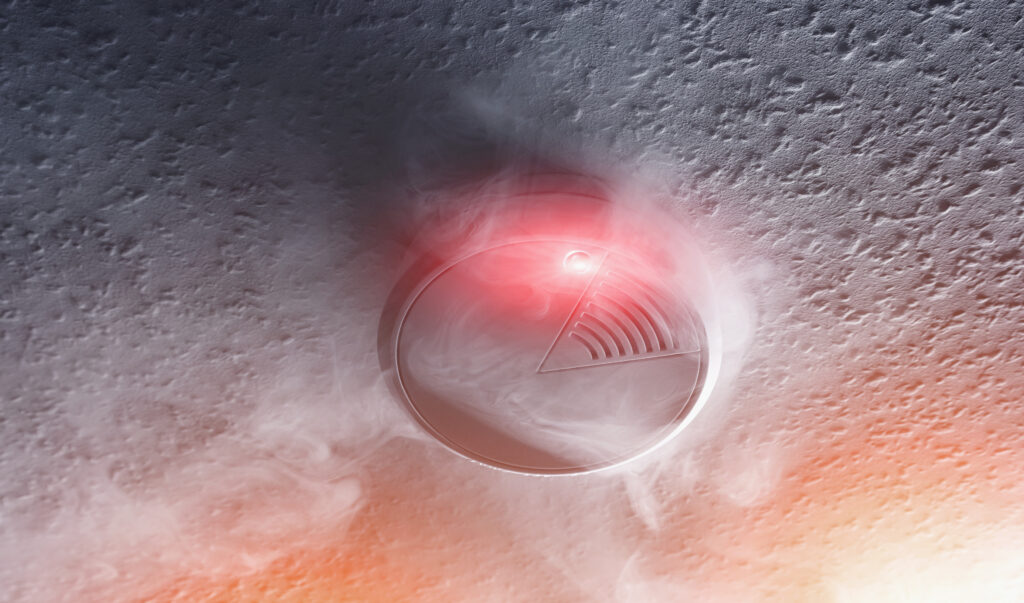
In an emergency, every second matters. Whether it’s a fire racing through your home or carbon monoxide building silently in the air, a crisis can escalate quickly. Without an early warning, your family may not realize the danger in your home until it’s too late. That’s why smoke and carbon monoxide detectors are so important—they act as your home’s alarm bells, signaling at the first hint of smoke or carbon monoxide so you can act quickly.
Protect Your Home from Fire and Carbon Monoxide Poisoning
Smoke and carbon monoxide (CO) detectors are simple but essential. Fires can overwhelm a home in minutes, while CO—an invisible, odorless gas—can be deadly before you know it’s there. With detectors in the right places, you’ll have time to respond to both hazards.
Smoke Detectors: Early Fire Warnings
October is National Fire Prevention Month—a reminder to prepare before emergencies strike. The U.S. Fire Administration reports that nearly 40% of fatal home fires occur in houses without working smoke alarms. For Albuquerque families, where older wiring and closely built neighborhoods are common, smoke detectors are especially important.
There are two main types:
- Photoelectric alarms: Detect slow, smoldering fires, such as overheated wiring.
- Ionization alarms: Detect fast-moving flames, like curtains or paper catching fire.
Experts recommend having both types in your home or using a dual-sensor unit. Smoke detectors don’t just alert you to flames—they also protect against smoke inhalation, a leading cause of fire-related deaths.
Carbon Monoxide Detectors: Critical for Gas Heating
Carbon monoxide, often called the “silent killer,” has no color, smell, or taste. In Albuquerque, where natural gas powers many furnaces, stoves, and water heaters, CO detectors are a must. A cracked heat exchanger, blocked vent, or malfunctioning appliance can create dangerous levels of CO indoors.
Warning signs of CO poisoning include:
- Headaches, dizziness, or lightheadedness
- Shortness of breath, chest pain, or rapid heartbeat
- Nausea or vomiting
- Blurred vision, loss of coordination, or muscle weakness
- Confusion, fatigue, or sleepiness
- Symptoms that improve when you leave your home but return when you go back inside.
Prolonged exposure is fatal—and it happens especially quickly for children, older adults, and people with heart or lung conditions. If a CO detector sounds, leave immediately and call 911.
Why Combo Smoke + Carbon Monoxide Detectors Make Sense
Many families now choose combination smoke and CO detectors. Instead of installing two separate devices in the same room, a combo unit handles both jobs. Inside, one sensor is designed to pick up smoke, while the other monitors carbon monoxide levels. If either one detects a problem, the alarm sounds—and some models even tell you whether it’s smoke or CO. With both protections built into a single device, you get reliable coverage without the extra clutter.
Benefits of a combo detector include:
- Provide two types of protection in one device
- Save space on ceilings and walls
- Often include voice alerts that specify whether smoke or CO is the problem
Pros: Convenience, fewer devices to maintain, and full coverage.
Cons: If one sensor fails, the entire unit must be replaced. Placement may also be less flexible compared to installing separate detectors.
Placement, Lifespan, & Maintenance of Detectors
Detectors only protect your home if they’re installed, tested, and replaced on time. Even the best smoke or CO alarm can fail to do its job if it’s in the wrong spot, has dead batteries, or has reached the end of its lifespan. Taking a few minutes to check these details makes the difference between an early warning and no warning at all.
- Placement: Install alarms inside every bedroom, outside sleeping areas, on every floor, and near fuel-burning appliances. Keep them at least 10 feet from stoves to reduce false alarms. While smoke detectors are typically installed on ceilings, experts recommend installing CO detectors on the sides of walls—about 5 feet from the floor. This is because CO mixes evenly with air, unlike smoke, which rises.
- Lifespan: Smoke alarms typically last 10 years, CO detectors last about 5–7 years, and combination units last 7–10 years. Even if they appear to be working, your alarms should be replaced when they expire.
- Maintenance: Test frequently, change batteries yearly, and replace expired units on schedule. If your CO detector operates on a battery, test it weekly.
By keeping up with these basics, you’ll know your alarms are ready when you need them most.
Protect Your Family This October with an Electrical Inspection
October is National Fire Prevention Month—a perfect reminder to make sure your home’s alarms are ready to do their job. In Albuquerque, many homes mix older electrical systems, gas heating, and attached garages—all factors that can increase the risk of fire or carbon monoxide. Keeping your detectors current and working properly is one of the easiest ways to protect your family.
But smoke and CO alarms are only part of the picture. An annual electrical safety inspection is essential for uncovering hidden hazards like overloaded circuits, worn wiring, or faulty outlets—problems that could spark a fire or make CO risks worse. Homes with older wiring, new appliances, or even subtle signs of electrical issues may need more frequent checks.
With an electrical inspection, you can catch problems early and fix hazards before they become dangerous emergencies, as well as upgrade any outdated wiring or appliances. Remember—the best protection for your family is preparation.
Trust Strongbuilt to Keep Your Home Safe
We understand the unique safety challenges Albuquerque families face. From heating systems to electrical and gas appliances, our expert technicians provide thorough electrical safety inspections and expert service to keep your home safe and comfortable. Make sure your smoke and carbon monoxide detectors are working when it counts—call us today to schedule a detector check or replacement!